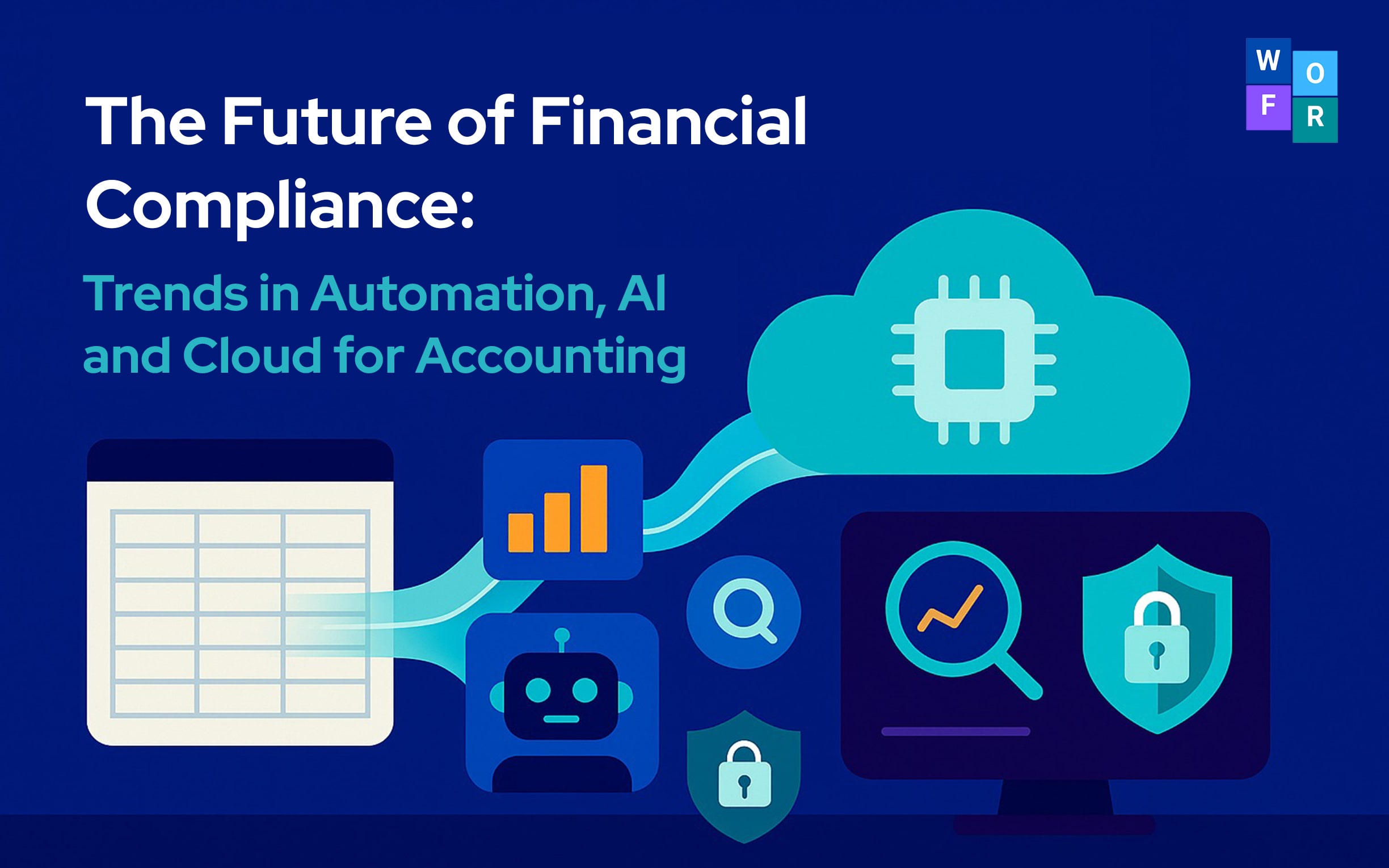
Financial compliance is evolving faster than many finance teams can keep up with. New technologies, automation, AI, and cloud platforms – are not just efficiency tools; they’re reshaping how companies meet regulatory requirements, evidence controls, and prove the integrity of their numbers.
For finance leaders, the question is no longer “if” to adopt these technologies, but “how” to weave them into compliance, controls, and audit-readiness without creating new risks.
Let’s look at a practical, forward-looking guide on how these trends are reshaping financial compliance, and more importantly, how organisations (and partners like WOFR) can turn them into an advantage!
The landscape in today’s world…
Cloud platforms are becoming the backbone of finance, automation is eliminating manual choke-points, and AI is moving from experimental pilots to mainstream use in finance functions. 58% of finance teams were already using AI in 2024, marking a rapid adoption curve for intelligent tools in finance.
Five trends that will define the next wave of financial compliance
Cloud-first finance: single source of truth, faster compliance
Cloud ERP and data platforms enable a single source of truth for accounting, reconciliations, and statutory reporting. Organisations are shifting to cloud ERP in large numbers; more than half of organisations with ERP software now use cloud-based solutions, which speeds consolidation, standardises ledgers, and simplifies evidence collection for audits.
Why it matters for compliance
- Centralised data means faster, auditable extraction of evidence during statutory filings and tax audits.
- Cloud updates and vendor-managed security reduce the operational burden of maintaining compliant infrastructure.
- Cloud-native reporting supports real-time controls and continuous monitoring.
Automation & RPA: removing repetitive risk
Robotic Process Automation (RPA) and workflow automation are standardising repetitive compliance tasks, bank reconciliations, intercompany eliminations, and recurring journal entries, with minimal human intervention. Adoption in finance is high: around 80% of finance leaders have implemented or plan to implement RPA, making it a core compliance tool rather than a niche experiment.
Compliance benefits
- Automated reconciliations reduce reconciliation drift and late adjustments.
- Exception routing with SLAs creates clear ownership and audit trails.
- Faster close cycles reduce the window for error and restatements.
AI and generative AI: smarter risk detection and compliance automation
AI is moving beyond reporting dashboards into intelligent compliance use cases: anomaly detection, predictive risk scoring, contract clause extraction, and automated disclosure drafting. With finance functions increasingly using AI, leaders can now automate judgement-intensive tasks while preserving auditability. 58% AI adoption in finance shows growing confidence in AI’s value.
Practical examples:
- Machine-learning models flag unusual vendor payments or revenue recognition patterns.
- NLP tools extract lease or contract clauses to accelerate IFRS 16/Ind AS 116 computations.
- Generative models draft first-pass disclosure language that technical accountants then validate.
Integrated compliance stacks: controls, evidence, and automation in one flow
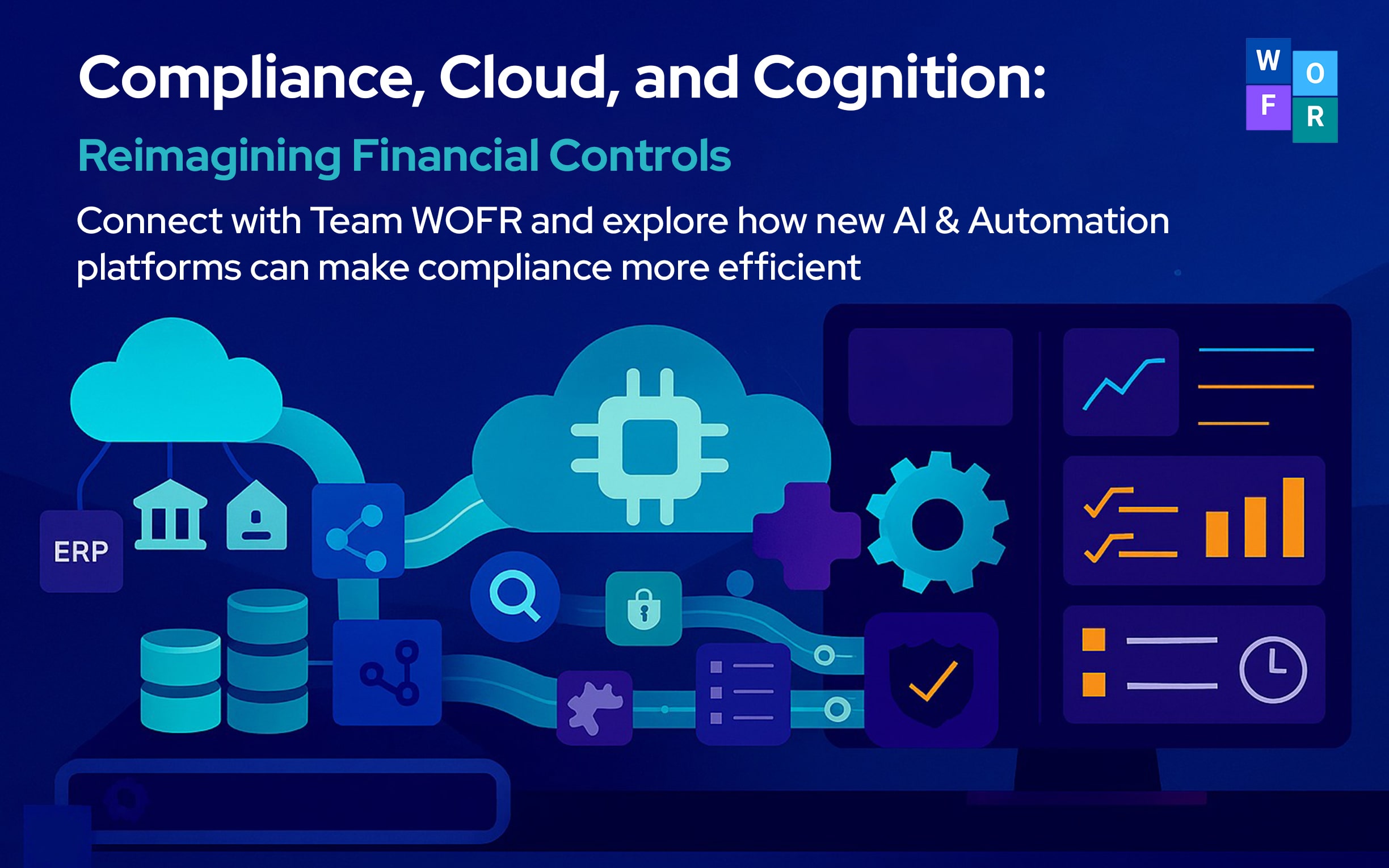
Emerging toolchains connect ERP, reconciliation engines, workflow automation, and BI platforms so that controls, evidence, and reporting are part of the same automated flow. This reduces the “stitching together” of evidence during audits and enables continuous control testing rather than point-in-time checks.
Business impact
- Auditors can test controls digitally, using the same system evidence your finance team uses.
- Control failures surface earlier, with remediation tracked automatically.
Platform economics and market momentum
Cloud and AI investments are accelerating: the cloud ERP market is growing rapidly, projected to rise substantially in the next five years. This investment momentum means tools will continue to improve and become more accessible to mid-market firms, not just enterprise players.
What CFOs and compliance leaders should do now – a practical roadmap
Prioritise the “single source” move
Start by consolidating finance-critical data into a cloud data model or ERP. This reduces reconciliation workload and creates an auditable data lineage.
Automate control-critical processes first
Identify high-volume, high-risk tasks (bank reconciliations, payroll validation, P2P three-way matches) and automate them. Focus on exception handling and SLAs.
Embed accounting logic in the pipeline
Don’t just move spreadsheets to BI. Encode revenue recognition, lease logic, FX reval rules, and GAAP/IFRS mappings in the ETL/transform layer so dashboards match statutory outputs.
Use AI where it augments judgement, not replaces it
Deploy AI for anomaly detection, contract extraction, and first-pass drafting, but keep technical accountants in the loop for validation and disclosure decisions.
Design controls into automation
Make approvals, evidence attachments, and access controls system-enforced. Automated workflows should produce audit-ready evidence packets.
Invest in change and governance
Assign data owners, run training, and set KPIs for data quality and control SLAs. Technology alone won’t deliver compliance improvements; people and processes must follow.
Risks & mitigation, what keeps regulators and auditors cautious
- Model risk: AI tools can be opaque. Mitigate with model documentation, validation, and human-in-the-loop signoffs.
- Data governance lapses: Centralised data is powerful, but only if access controls, encryption, and backup policies are sound.
- Over-automation: Automating a flawed process magnifies errors. Standardise and document SOPs before automation.
- Third-party dependencies: Cloud vendors introduce new vendor-risk considerations; maintain vendor assessments and SLAs.
How WOFR helps bridge the gap between tech and compliance
WOFR’s proposition is simple yet efficient, combining technical accounting expertise with automation-enabled delivery, and is designed for this new era. Whether you’re preparing for an IPO, scaling finance operations, or tightening controls, WOFR helps:
Translate accounting standards into pipelines: WOFR embeds GAAP/IFRS/Ind AS logic into data models, ensuring automated reports are standards-compliant and defensible.
Build audit-ready automations: Reconciliations, evidence trails, and exception workflows are implemented so auditors find evidence, not surprises.
Deliver managed and advisory options: From short technical-accounting engagements to full Managed Services, WOFR provides flexible delivery models that pair human expertise with automation.
Automation, AI, and cloud platforms aren’t just tech trends, they’re the infrastructure of modern financial compliance. Organisations that treat these technologies as strategic compliance enablers (not mere efficiency tools) will gain faster closes, fewer audit queries, and stronger investor confidence. The good news: the tools are maturing and accessible; the key is pairing them with technical accounting rigour, robust controls, and clear governance.
If you’d like a short, practical roadmap for your organisation – including an assessment of where automation and AI will deliver the most compliance value, WOFR can help. Contact us for an automation & compliance readiness review.