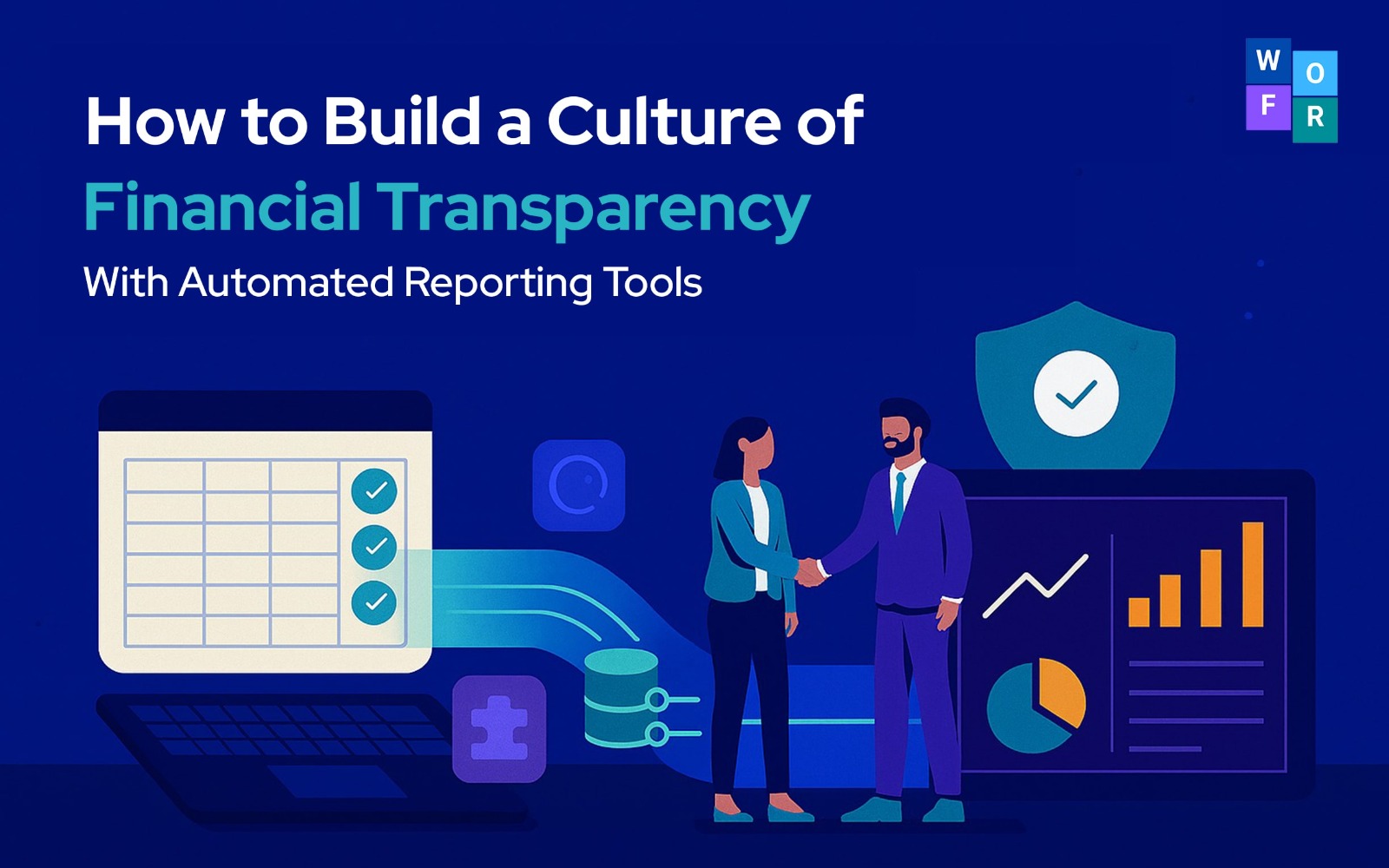
Financial transparency isn’t a compliance checkbox; it’s the backbone of trust with investors, boards, and employees. Yet transparency won’t happen by accident…
It grows from consistent processes, clear ownership and the right technology! Automation makes that culture achievable: it turns manual, siloed spreadsheets into auditable, real-time dashboards that everyone can trust.
Let’s look at a practical and efficient playbook for finance leaders who want to build a culture of financial transparency using automated reporting tools – with examples of how WOFR helps organisations put this into practice!
Why financial transparency matters (and why now)
Transparent financial reporting helps companies:
- Build investor and board confidence.
- Reduce time spent on audit queries.
- Enable faster, better decisions with timely, reliable data.
Prevent surprises through earlier detection of anomalies. WOFR has supported hundreds of clients in strengthening reporting, leveraging automation and disciplined processes to deliver clarity and governance. Our firm has gained experience of working with over 200 clients and 100,000+ hours, as proof of practical exposure to real-world reporting challenges.
What automation actually does for transparency
- Automation isn’t magic, it solves specific, repeatable problems:
- Centralises data so everyone reads from a single source of truth.
- Standardises accounting logic (chart of accounts, recognition rules) so numbers are comparable.
- Builds an audit trail automatically, attaching source documents to every journal or reconciliation.
- Automates reconciliations and exception routing so teams focus on fixing problems, not finding them.
- Delivers role-based dashboards so stakeholders and everyone involved in the accounting project get the right view without drowning in detail.
In short: automation reduces manual error, increases auditability, and speeds information flow – all prerequisites for a transparent finance culture.
What helps build a culture of transparency?
- Start with leadership and clear intent
Transparency must be modelled from the top. CFOs and the executive team should clearly state reporting expectations, timeliness, accuracy and openness, and hold teams accountable. When leadership publishes the cadence and quality standards, the rest of the organisation follows.
- Define a single source of truth
Map your data landscape: ERP, payroll, banking, lease systems, spreadsheets, CRMs. Decide which systems feed the master reporting store and enforce mappings to a standard chart of accounts. The fewer the silos, the stronger the trust.
3) Pick the right automation stack… Pragmatically
You don’t need every tool, you need the right ones for your scale and complexity!
WOFR’s approach pairs technical accounting with automation so accounting rules are implemented correctly in the data pipeline, avoiding the common trap of “automating the wrong thing”.
- Standardise processes and evidence
Document SOPs for close, reconciliations, revenue recognition and exception management. Make the SOPs part of the automated flow, e.g., template-based reconciliations that attach to every journal and are visible on dashboards. This makes audits smoother and reduces ad-hoc work.
- Invest in training, change management and incentives
People drive the process. Run short workshops on the new tools, publish a monthly “data quality” scoreboard, and recognise teams that keep exception backlogs low. Incentives and clear SLAs embed the behaviours that sustain transparency.
Common pitfalls and how to avoid them
- “Automating chaos”: Standardise processes before building automation.
- Over-engineering: Begin with the highest-impact reports and expand
- Ignoring accounting nuance: Ensure technical accounting rules are embedded in the data model.
- Not assigning ownership: Each feed and reconciliation must have an accountable owner.
How WOFR helps put this into practice
WOFR combines technical accounting expertise, Managed Services, and automation-focused delivery to help organisations build transparent reporting processes that scale. Practical ways WOFR supports clients include:
Implementing a single data model with GAAP/IFRS/Ind AS logic built in.
Running reconciliation automations and exception routing as part of Managed Services so finance teams can focus on decisions
Designing evidence packs and audit trails that reduce audit friction and shorten fieldwork.
Delivering training, SOPs and a governance playbook so changes stick.
If you prefer a managed approach, WOFR’s end-to-end services shift the operational burden while preserving control and transparency.
Building a culture of financial transparency is a marathon, not a sprint. Automation gives you the tools, centralised data, reproducible accounting logic, and auditable trails, but culture comes from leadership, ownership, and measured processes!
When those elements come together, financial reporting becomes a strategic asset: clearer board conversations, faster audits, and better decisions.
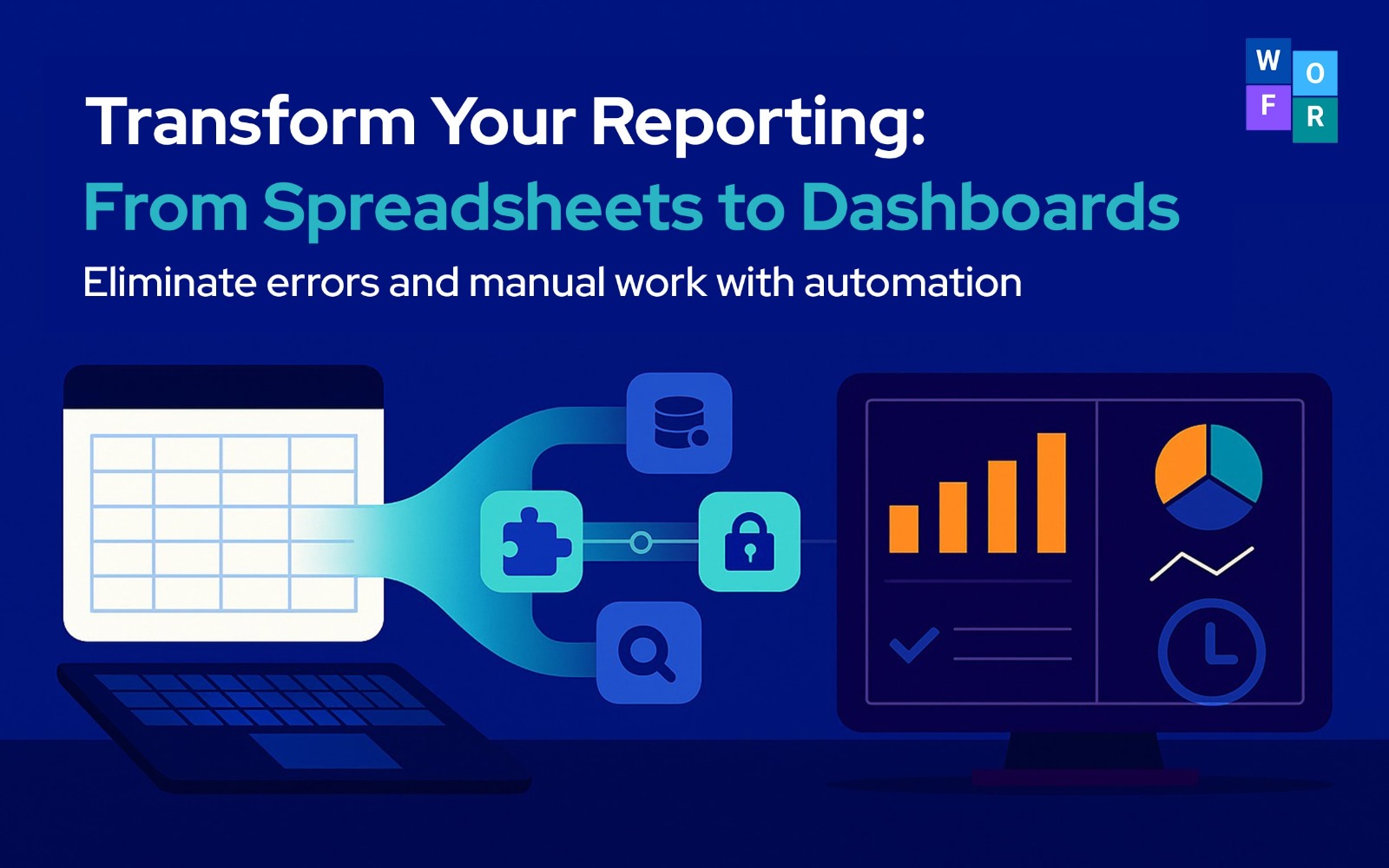
Ready to move from spreadsheets to transparent dashboards?
Connect with WOFR to discuss a tailored automation roadmap or a managed reporting pilot.